Women at the Capitol with the Center for Women and Democracy
March 9, 2024
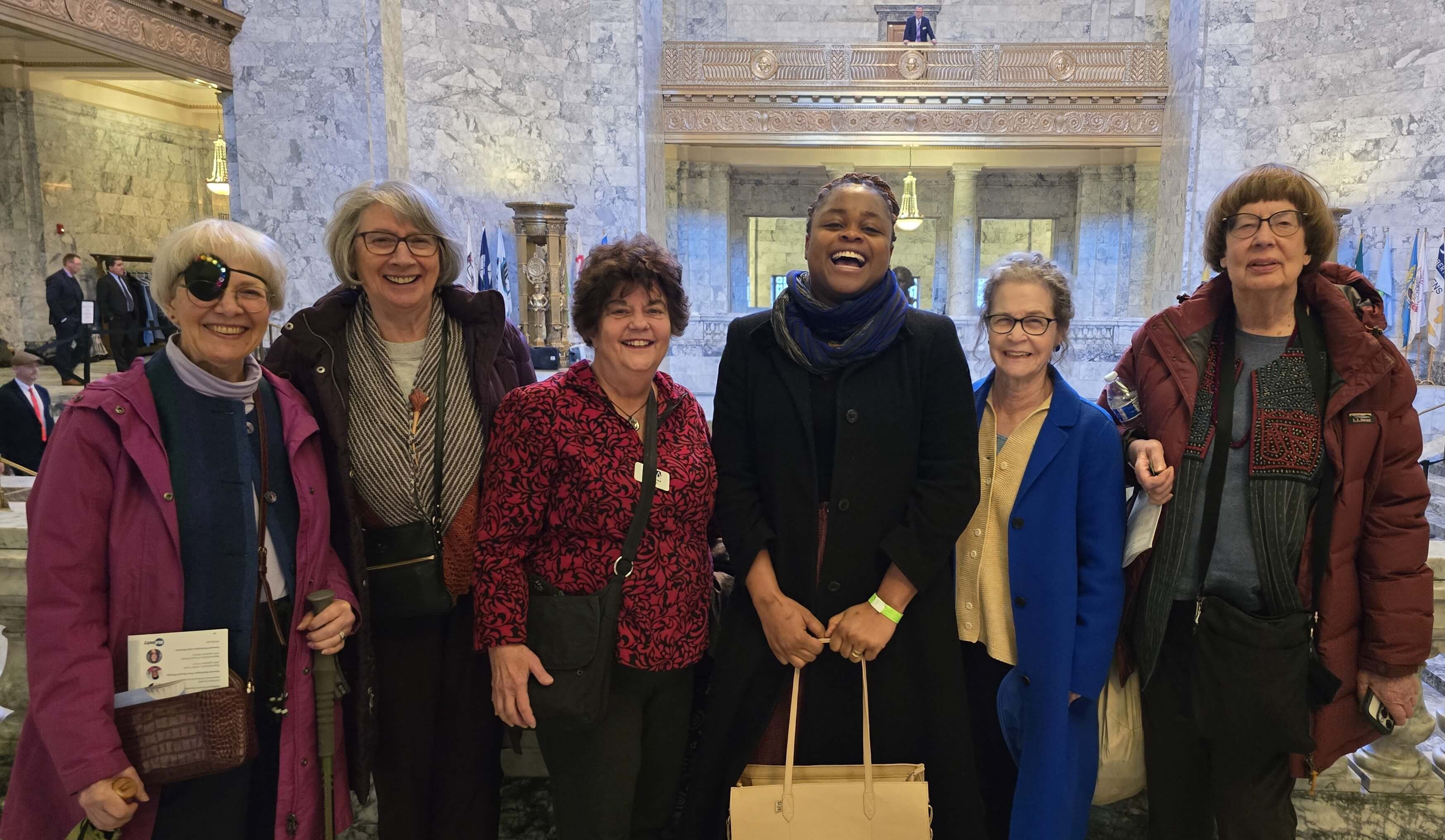 Several AAUW Seattle members were able to attend a first-rate event at the Capitol in Olympia on March 1, sponsored by the Center for Women and Democracy (CWD). CWD works to expose members to what is happening in policy-making and encourages them to advocate as citizens.

CWD also engages in lobbying and led the way in lobbying for the establishment of the WA Women’s Commission. There were over 150 women and a few men at the event, which had three parts—well, four, if you count the bus ride up and back, which gave us a lot of visiting time. True to their mission, CWD engaged event support staff for photography, catering, and other services from women-owned and often minority-owned businesses.
Upon arrival, we had Tea with the Justices at the Governor’s Mansion. The Justices were very personable and open about their daily lives and how the Supreme Court of Washington State operates. Interestingly, many technology innovations have emerged because of the pandemic, including improved access to courts and case management support.
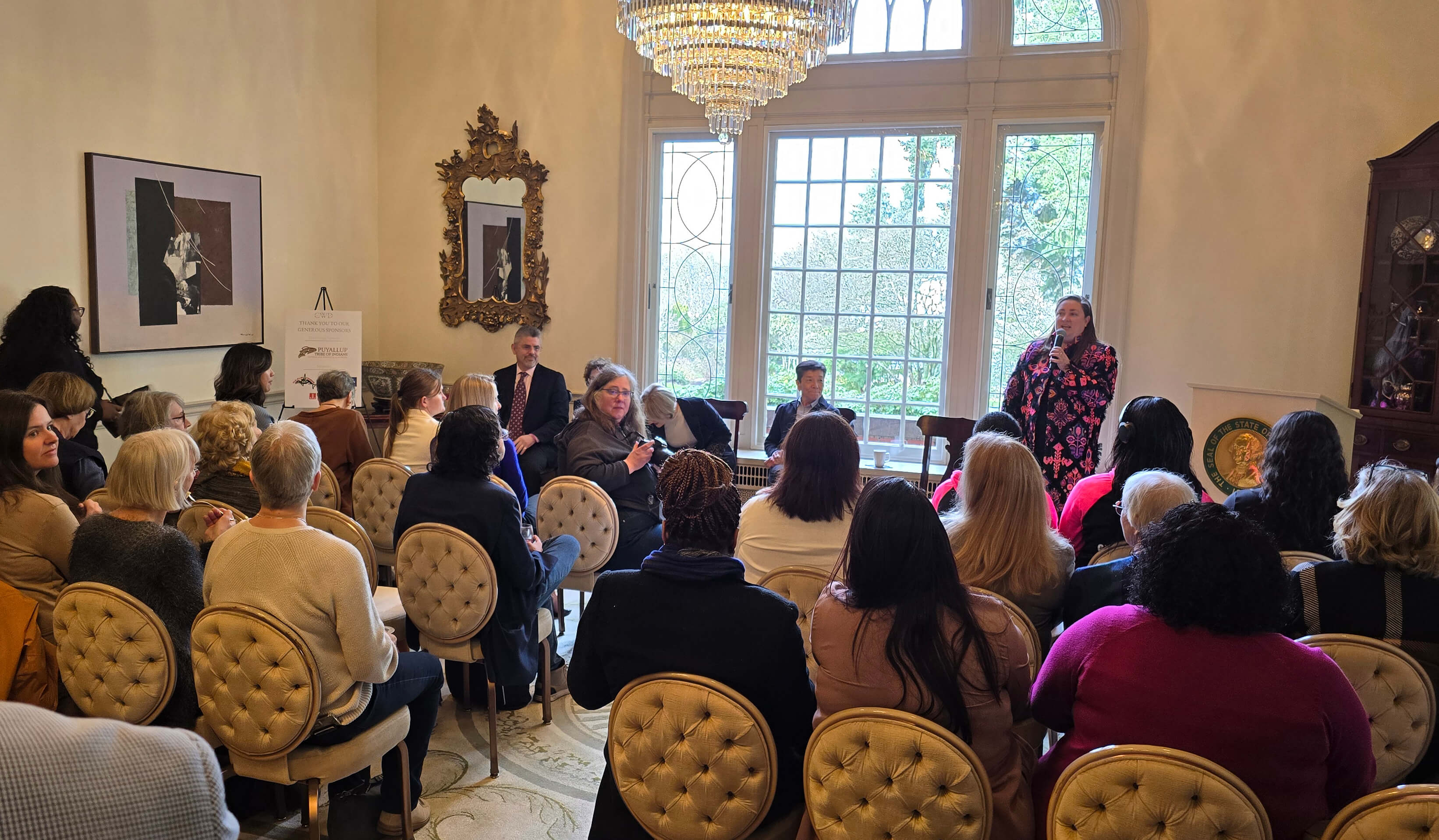
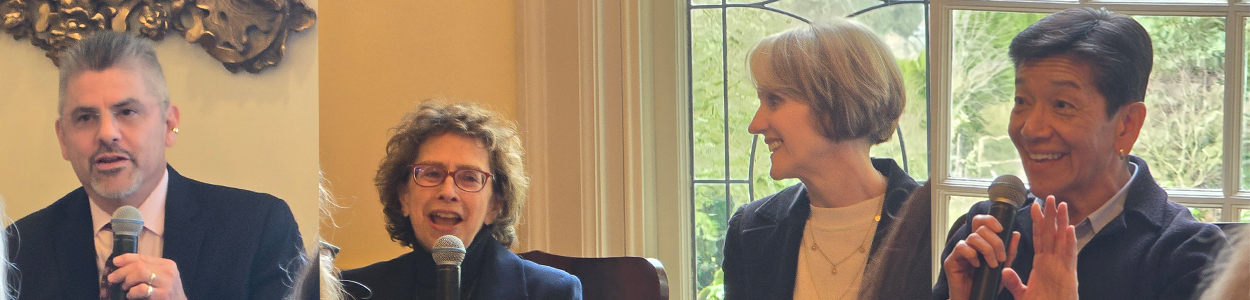
Justices in attendance were Supreme Court Chief Justice González, Supreme Court Justice Stephens, Supreme Court Justice McCloud, and Supreme Court Justice Yu. Frances Donegan-Ryan, President of CWD, asked excellent questions. We also learned that Washington State has the most diverse State Supreme Court in the nation.
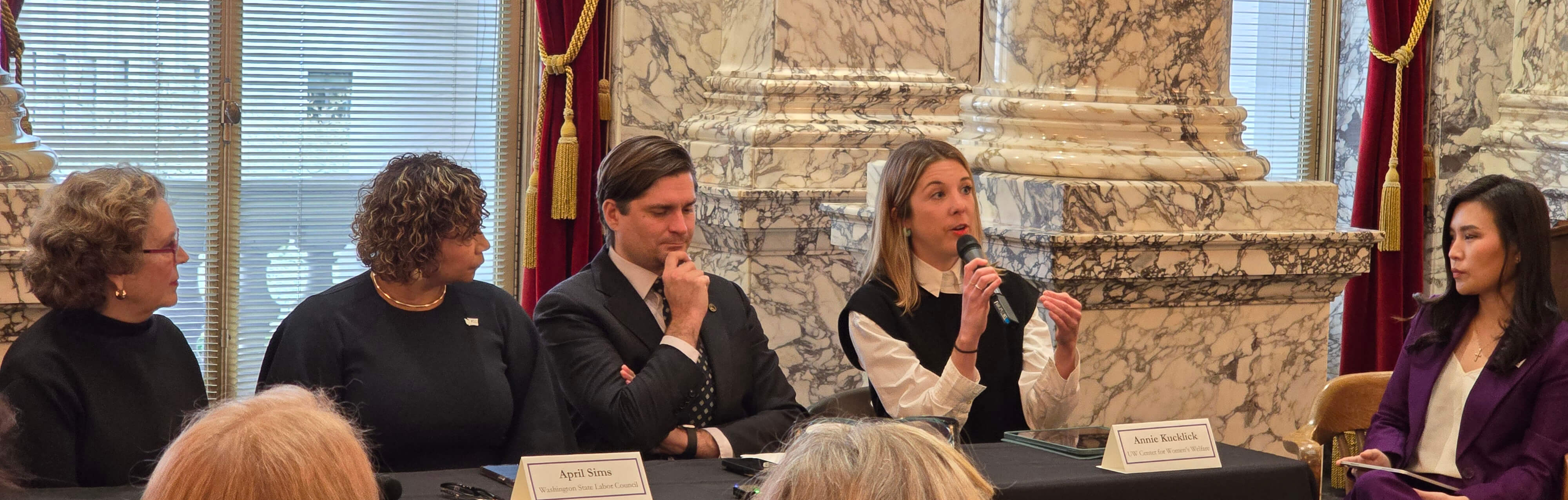
The second event was Co-Creating the Future of Gender Pay Equity, which took place in the Capitol Building. Optionally, you could take a tour of the building, which is impressively beautiful. Panelists included Mike Pellicciotti, Washington State Treasurer; April Sims, President of the Washington State Labor Council; Kate Isler, CEO of WMarketplace and co-founder of Be Bold Now; Annie Kucklick, research coordinator at UW Center for Women’s Welfare; and moderator Grace Yoo, executive director of the Washington State Women’s Commission. Sims shared a compelling backstory about her single-mom family that managed to make a leap out of poverty when her mother landed a union job. Sims is also the first woman president of the King County Labor Council. AAUW has great studies on gender equity which this session reinforced. High-paying technology jobs have only 13% women, and construction jobs have only 3% women.
The final event was an Evening Reception Celebrating the 2024 Honorees. Two state employees were honored: Sanyu Tushabe from the Employment Security Department and Christine Scarlett from the Department of Enterprise Services. McKinstry, a construction company, was also honored for their progressive stance in providing sanitary conditions for women in construction, including facilities for expressing breast milk. Their support contributed to the passing of a law this session requiring these provisions. McKinstry has over 30% female employees.
Two State Representatives were also honored. It was challenging to have them attend because the legislature was still in session, and it was the last day for bills to be passed in the House and Senate. However, they made time to visit us during their breaks. Rep. Jamila Taylor, from the 30th Legislative District, is an advocate for fair housing and zoning, school meals, youth violence prevention, and supports those with developmental disabilities. Rep. Monica Stonier, from the 49th Legislative District, views public service as both a calling and a responsibility. She is a leader on issues such as workers’ rights, public education, health care access for children, and financial literacy education.
Rep. Tarra Simmons, from the 23rd District, also made an appearance. She was leading the push for the Keep Our Care Act in the House, which she anticipated would be debated throughout the night. (It was, but unfortunately, it did not pass.) She has a memorable backstory that rounded out the day. She experienced a very difficult childhood and was in and out of trouble. She is the only formerly incarcerated legislator. After her imprisonment, she earned her law degree, yet was initially forbidden to take the law exam. Two other men who had been formerly incarcerated had been allowed to take the exam. One of them defended Simmons all the way to the Supreme Court of the State of Washington, where the court unanimously ruled in her favor. She was then able to take and pass the exam and later ran successfully for the legislature.


